Better SALES by DISC Personality Profiling!
 About this article?
- This highly informative article looks at the transition from the old-school Sales method of static sales pitches to AI-powered “Hyper-Personalized ” Sales Pitches. So also in the context of the competitive Indian IT sales scenario. By applying machine learning and the DISC framework to read a prospect’s “Digital Body Language :)” on the Social Media Signature. Be it their LinkedIn activity, email tone, etc., it looks at how sales professionals can move beyond “Jugaad” to Data-Driven Empathy and connection to the end customer.
- It suggests how any salesperson could segment buyers into four core buyer profiles (Commander, Social Architect, Anchor, and Logic Gate or the DISC personality types in short form). This helps to customize everything from key phrases while interacting and images to Google Ad keywords to fit the customer’s psychological blueprint! This, in turn, helps in decreasing friction and increasing the “Closed-Won” ratio. Detailed Breakdown of 4 Buyer Profiles Generated by AI-Profile Type AI Signals Pitch Key Visuals based on.
- So also this article at length discusses the DISC personality profiling, which is based on four observable behavior styles:
- That is D for Dominance, I for Influence, S for Steadiness, and C for Conscientiousness. These personality styles are discussed, which are based on how fast someone works and what they think is most important, or as a matter of their priority.
- With the DISC personality Framework, the article discusses how one can learn a lot about oneself.
- This DISC Framework based Categorization turn, helps in decreasing friction and increasing the “Closed-Won” ratio. Detailed Breakdown of 4 Buyer Profiles Generated by AI-Profile Type AI Signals Pitch Key Visuals based on. The Commander type (D- type of the DISC framework) Short, punchy posts; “Results” focus from this type of end customers.
- It also helps in better ROI, speed, and bottom-line effectiveness! Then comes the I type of the DISC framework.
- That is the Social Architect (First Part). High social engagement, emotive language- that engages these emotional types very well. Once again, creative storytelling helps. That is Storytelling, social proof, and “Hero” status.
- The Anchor type (S) Long tenure; focuses on “Reliability” orientation.
- Safety. Support. This, as we have guessed, is the S type in the DISC framework. They also focus on long-term partnerships. Then there are people who need Logical (C) and or Technical articles. This is the C-type of the DISC Framework. They demand a “Data” focus. That is, they need Precision, mathematics, and architectural honesty.
- So in summary this articles discusses how this Framework helps to improve the quality of one’s personal and professional relationships. It does this by showing one a clear and simple picture of how one usually tends to act.
- In the article below, we will also suggest how our AI based Sales Enhancer solution can be used in various situations to enhance sales significantly!
 The basics of personality testing with DISC:
What are the origins of the DISC Theory
The basics of personality testing with DISC:
What are the origins of the DISC Theory
- The DISC model is based on the work of Dr. William Moulton Marston, a psychologist who wrote the book Emotions of Normal People in 1928. Marston intended to categorize the behavioral expressions of emotions, focusing on individuals’ perceptions and their interactions with the environment. Marston established the foundation for the theory; yet subsequent researchers, such as Walter Clarke in the 1940s, were the initial testers of this theory. They changed the original terms so that they fit with the DISC framework we use now.
 The CORE Need for DISC Framework in SALES Scaling!
- The DISC model is one of the most popular and best ways to look at or analyze behavior. It gives us a simple but deep way to learn about how people act, what they would like to talk to each other about, and what they also like to work on. It doesn’t check for intelligence, values, or skills. It doesn’t tell what to do; it tells one how people act and show their feelings in different situations.
- So In the tough competitive world of B2B tech sales, from the buzzing IT hubs of Noida or say India to the towering skyscrapers of Silicon Valley(Bay Area), the ‘standard way of selling earlier does not work at all. We’re in the age of Hyper-Personalization. The most successful sales professionals aren’t just selling a product; they’re engineering a psychological fit of their solutions to end customers for high success rates.
- The AI Buyer Profiling enables sales teams to understand a prospect’s “Digital Body Language” as discussed above and personality traits *before* the first “Hello.” We’ll explore how one can take those AI insights and plug them right into one’s sales workflow — to adapt one’s pitch style for maximum conversion.
- Our DISC Sales Solution: It would be of interest for anyone 🙂 to know that we have developed a Unique & very Powerful AI-based Personality Profiler that helps you to enhance Sales by at least 30%! The accuracy and personalization go much beyond the DISC framework and your handle on people and sales; it would increase significantly for sure.
- It’s a Demo Version available to you at NO cost for testing and quick review. You can find a reference link to it at the bottom of this post. One may check the results oneself in only thirty(30) seconds! Therefore, give it a try now, as it will help you! If you want to know how Personality Profiling or Adaptive Sales can help you in SALES, it is given in the Article List below.
 1. What is the AI Buyer Profiling Science?
- AI Buyer Profiling is about applying machine learning and natural language processing (NLP) to analyze the public data of a prospect. that is his or her LinkedIn posts, interview transcripts, company white papers, and even email tone. These tools, often built on the DISC Framework or Big 4 personality traits, give one a “Battle Card” that helps one to predict how the buyer processes information, makes decisions, and responds to pressure.
- In the Indian IT Sales Scenario, this means moving from “Jugaad” (resourceful guesswork) to Data-Driven Empathy for the professional. You don’t have to wonder if a CTO is a detail-oriented skeptic or a big-picture visionary — AI has already analyzed their communication patterns to tell one for best results:).
The Core Principles of DISC framework:
- The DISC model has four styles, or call them 4 quadrants. Each one has two main behavioral axes that cross each other. These axes show how fast someone is moving and what they are most interested in:
 Outgoing/Active (Upper Half of the 4 quadrants ):
- People on this side are usually quick, confident, and ready to do something or make a choice. People think they are more involved in their conversations when they talk faster. Unlike D and I styles.
 o Reserved/Thoughtful (Lower Half of the quadrants):
- People on this side are more careful and take their time before making a decision. People think they’re being more careful when they talk slowly. (Like styles S and C).
 Priority (or Compass Drive) of person based on DISC personality Framework:
- This side is more focused on tasks than people. Task/Logic-Oriented (Left Half): People on this side are mostly interested in getting things done using logic, data, and results. They talk about the project and how to get it done. (Like, for example, styles C and D).
 People/Relationship-Oriented (Right Half of the quadrant) of the DISC diagram:
- People on this side are mostly interested in how things feel, how they relate to others, their experiences, and working together. They mostly talk about who and why something happened. (Like styles I and S).
4) These two dimensions make up the four different ways people behave within the DISC Personality framework:
- How fast, how stylish, and how important The Main Idea D Results and Challenges of Outgoing Tasks: Outgoing People Are Powerful and Exciting S-type People who are quiet work together and stay stable. C. Task Set Aside: Quality and Correctness Send to Sheets
- Everyone has a little bit of each of the four styles, but one or two are usually stronger. These styles show what they like to do and what makes them feel good. No one style is better or worse than another because each has its own pros and cons..
- One’s own style, personality, and the reasons one does things: How to Talk to People or connect to them: Possible issues in some personalities.
 D Type Personality = High Dominance:
-
- What motivates one to win, compete, succeed, and get through tough times? Some of their traits are being direct, decisive, assertive, results-oriented, strong-willed, and willing to take risks. Brief and to the point, with an emphasis on getting things done and the bottom line. Not as interested in small talk or details. They might seem aggressive or not listen well, and they might be impatient and demanding. This is typical of a company head, or say, a delivery head, who wants numbers in place.
- AI Indicators: The person might have Short and punchy LinkedIn posts. This kind of personality has Emphasis on “results”, “winning”, and “efficiency”.
- The Adjusted Pitch: Time and Power Matter to Commanders. Your pitch should be Executive Ready. Please skip the 10-slide “About Us” section.:)
- Key Phrase: “This solution will lower one’s operational overhead by 22% in the first quarter.”
- Visuals: executive ROI dashboards, competitive comparison charts.
I type personality = Intuitive & Influencers :
-
-
- Have an Effect: Wanting to be liked, do things with other people, be popular, and have friends. Some of the traits are being friendly, happy, enthusiastic, persuasive, full of energy, and good at making friends. Uses stories and humor to be interesting and expressive; focuses on the good things that happen and how to connect with other people. They might act on a whim, not plan, forget important details, or try to do too much at once.
- AI Indicators: More Social media activity; use of warm, emotive language; emphasis on “innovation” and “collaboration.”
- The Adapted Pitch: They are sold on the “Who” and the “Why.” Tell stories. How will one’s solution make them a hero inside their organization?
- Key Phrase to be used as an emotional connect: “This is being used by leading firms like Adobe and IBM to transform their team synergy.
- Visuals: Video testimonials, team success stories, and slick, modern UI walkthroughs.
-
 S -Type Personality = Steadiness:
-
-
- They are focused on being honest, stable, thankful, and helpful to others, which keeps me going. S is a person who is loyal, patient, calm, helpful, and organized, and who gets along well with other people. They are nice, friendly, diplomatic, and look for things they have in common. Likes a place that is stable, predictable, and where people get along. People who don’t like sudden changes, are too easygoing, or try to avoid conflict may seem like they can’t decide what to do.
- AI Indicators: Long tenure at companies as they are more stable, professional attitude, modest language, uses “reliability”, “support”, and “process
- The Adapted Pitch: Anchors fear disruption; they prefer a steadier flow. One’s pitch should be about safety and long-term partnership. Slow down one’s delivery and concentrate on the implementation road map.
- Key Phrase: “Our support team is dedicated, and we have a 90-day phased transition plan to ensure zero downtime.” Visuals: Implementation workflows in detail are needed, and long-term support structures should be suggested.
-
 C – Type Personality = Careful and thoughtful)
-
-
-
- Meant for taking care of business: They are driven by high standards, quality, accuracy, logic, chances to use their skills, and keeping up high standards. Traits: careful, thoughtful, methodical, exact, detail-oriented, and reflective. It is complete, makes sense, and asks questions to help you understand. It checks everything by looking at steps, facts, and numbers. Too picky, can get stuck in the details, and may not be able to make quick decisions or be around a lot of people.
- AI Indicators: Publishes technical articles. Uses formal, precise language. Emphasizes “accuracy”, “data”, and “logic”.
- The Modified Pitch: They’ve done their homework already. They are looking for the flaw in the salesperson’s reasoning. Give “The Mathematics of the Solution.” The key phrase: “Based on our mathematical modeling and fuzzing tests, the error rate is limited to 0.001%. Visuals: Technical white papers, architecture diagrams, and raw datasets.
-
-
 5) How to Use DISC Framework at Work or office situations- the core benefits!
-
-
-
-
- The DISC model is useful because it helps people understand themselves and others better, which helps them do a lot of things better:
-
-
-
-
-
-
-
- People can change how they talk to each other based on how they like to talk. For example, someone with a “D” should be direct, someone with an “I” should be excited, someone with an “S” should be patient, and someone with a “C” should be thorough. This change makes things less stressful and answers any questions.
-
-
-
-
-
-
-
- Sales to external customers or any New concept or Idea within the Company as well; doesn’t stop after the presentation of one’s Solution, it continues in the Q&A or question and answer session. AI insights provided by the DISC Framework( we also have software that is able to do this for you) enable you to predict objections by the customer’s personality- leading to a very high success rate!
- So, for example, anticipating the “D” Type personality based on the software suggestions: They will test one’s price.
- So one’s Strategy: So please don’t defend the price; emphasize the price of inaction now. That can create a much better success naturally 🙂
- So if one is expecting the “C” type personality, in that case, they could ask about some arcane technical edge-case or a very special case. So one’s Strategy: One could have a detailed FAQ( Frequently asked questions) or have one’s technical lead ready to go to address the concerns. Do not ignore this aspect.
- They could ask how it affects their present team. This could be for the “S”: The strategy for them is to emphasize how easy it is to train and the “human” support they could receive.
-
-
-
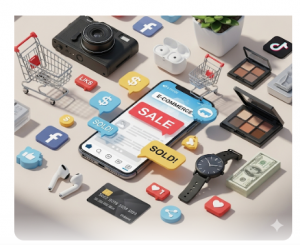 How salespeople could use DISC Framework for higher effectiveness ?
-
-
-
-
-
- Now, Salespeople who use DISC profiling have a big advantage as it helps them to quickly figure out and adapt to a customer’s preferred way of buying. Salespeople first learn about themselves by figuring out their own natural selling style (D, I, S, or C). This helps them figure out what they’re good at and what they might not be good at in different situations.
- The main point, though, is to use the framework on the prospect: by watching how fast or slow a customer is moving and whether they are task- or people-oriented, the salesperson can quickly figure out their DISC profile. This lets one change their behavior right away, which makes the sales pitch more effective. For example, if one is dealing with a Dominance (D) client, one should be direct and focus on results.
- If one is dealing with an Influence-oriented (I) client, one should be enthusiastic and tell stories to the client to get more business and a deeper connection .
- This process of matching styles of Sales interaction is directly related to higher close rates. As it quickly builds trust and rapport. The salesperson doesn’t have to use a one-size-fits-all script; instead, they can change how they talk, present, and negotiate to fit the buyer’s specific needs.
- A conscientiousness (C) client who values accuracy and logic will be convinced by data and detailed comparisons. A steadiness-oriented (S) client who values stability and cooperation will respond better to a patient, non-pressuring approach that emphasizes reliability.
- By speaking the customer’s behavioral language, DISC helps reduce friction, avoid misunderstandings, handle objections more persuasively, and, in the end, shorten the sales cycle by making the sales process fit the buyer’s natural decision-making comfort zone.
-
-
-
-
 DISC Utility for Team Building and Working Together:
-
-
-
-
-
- DISC helps managers and team members see the value of cognitive diversity, or the difference in understanding the same thing by different people. It lets teams use each person’s natural strengths, like giving someone an “S” to keep things moving and an “I” to present the final idea. It also makes them think about what might go wrong.
-
-
-
-
 How managers or Leaders could use this framework
-
-
-
-
-
- Leaders can use DISC to find out what their natural style is and how it affects the team. They can use this information to change how they manage, delegate, and motivate their employees so that they better meet the needs of each person. This gets them more involved and helps them get more done.
-
-
-
-
 How It could be used for Conflict Resolution:
-
-
-
-
-
- The model provides an impartial framework for depersonalizing conflict, that is, instead of saying X did this or Y did this. One can simply say, “We just have different ways of doing things,” instead of “You’re hard to deal with, etc .” This gives you time to think about how both sides can change and learn more about what makes people fight, like when a “D” pushes too hard and a “S” pulls back.
-
-
-
-
 conclusion:
-
-
-
- So, the use of AI Buyer Profiling in one’s sales strategy is no longer a luxury but a requirement for anyone wanting to lead in the Indian or world IT or any other Vertical Sales Scenario. Adjusting one’s pitch style to match the prospect’s psychological blueprint reduces friction, builds trust faster, and dramatically increases one’s “Closed-Won” ratio.
- The future of selling is Adaptive, AI-informed, and deeply human! So one needs to begin with one’s top five prospects now—how would their AI profile alter how one could deliver one’s next slide?
- In short, the DISC model is an easy and useful way to learn about the four main behavioral styles: D (Dominance), I (Influence), S (Steadiness), and C (Conscientiousness).
- It does this by putting a person’s speed and priorities on two axes( X and Y) that cross each other. The ideas of William Moulton Marston are what the model is based on. The model’s true worth lies not in categorizing individuals but in enhancing their self-awareness and guiding them on how to apply that awareness in their professional endeavors. People can talk about how they like to talk to others, do their jobs, and handle problems in a way that everyone can understand.
- This helps people change how they act, which makes them better at leading, working together, and talking to each other. So it’s, in a sense, helpful in personality enhancement. The first step to getting more done at work and making one’s relationships stronger is to know how one acts and respect how others do things. So this self-acceptance helps much better performance and happiness within the teams.
-
-

- TRY SALES Enhancer for FREE Now!!!
 Please SELECT only the TRIAL REPORT option and NOT the DEMO Report as given in the image above on the form
CHECK TRIAL SALES & Customer Relationships Enhancer report CLICK HERE
For paid reports , you can kindly contact us at abioanalytics@gmail.com
OR simply fill up the form:
To know how SALES People could Use DISC Framework to Scale their SALES significantly? CLICK HERE
Please SELECT only the TRIAL REPORT option and NOT the DEMO Report as given in the image above on the form
CHECK TRIAL SALES & Customer Relationships Enhancer report CLICK HERE
For paid reports , you can kindly contact us at abioanalytics@gmail.com
OR simply fill up the form:
To know how SALES People could Use DISC Framework to Scale their SALES significantly? CLICK HERE
- TRY SALES Enhancer for FREE Now!!!
Please SELECT only the TRIAL REPORT option and NOT the DEMO Report as given in the image above on the form
CHECK TRIAL SALES & Customer Relationships Enhancer report CLICK HERE
For paid reports , you can kindly contact us at abioanalytics@gmail.com
OR simply fill up the form:
 Other SALES ARTICLES